ICHRA Has a New Name: Meet CHOICE Arrangements!
ICHRA has a new name: CHOICE Arrangements. Learn what changed, what CHOICE means, and why the name change doesn’t change how ICHRA works.
Benafica helps employers design, launch, and manage Individual Coverage HRAs.
ICHRA stands for Individual Coverage Health Reimbursement Arrangement. It’s an alternative to traditional group health insurance that allows employers of any size to provide more flexible and cost-effective health benefits to their employees.
1. Employer sets a monthly allowance
The employer decides how much to contribute each month toward each employee’s healthcare costs. (Amounts are based on local individual market plans.)
2. Employees choose coverage
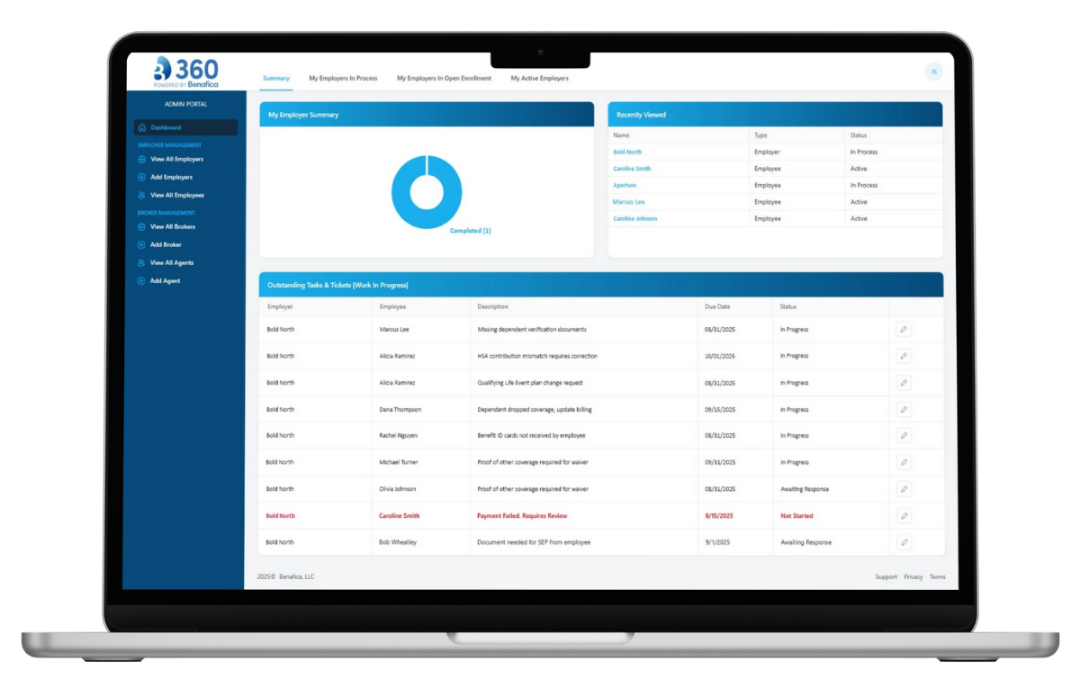
Employees select an individual health insurance plan that fits their needs. With ICHRA, employees can shop, compare and enroll in plans right on our BEN360 platform.
3. We enroll and set up payments
We process enrollment behind the scenes and set up monthly premium payments so coverage stays active without extra work on your end.
4. Ongoing administration
New hires, terminations, and qualifying life events are all handled in one place, with support year-round.
BEN360 is Benafica’s in-house ICHRA administration platform, built specifically to handle the compliance, reimbursement, and reporting demands of a well-run ICHRA.
This strategy ensures greater equity across your workforce.
This strategy can be more simple to implement, but it can disadvantage older employees and those living where insurance is more expensive.
Employers of any size can offer an ICHRA. You need to have at least one W-2 employee. An ICHRA typically starts to make more sense for employers with 5 or more employee
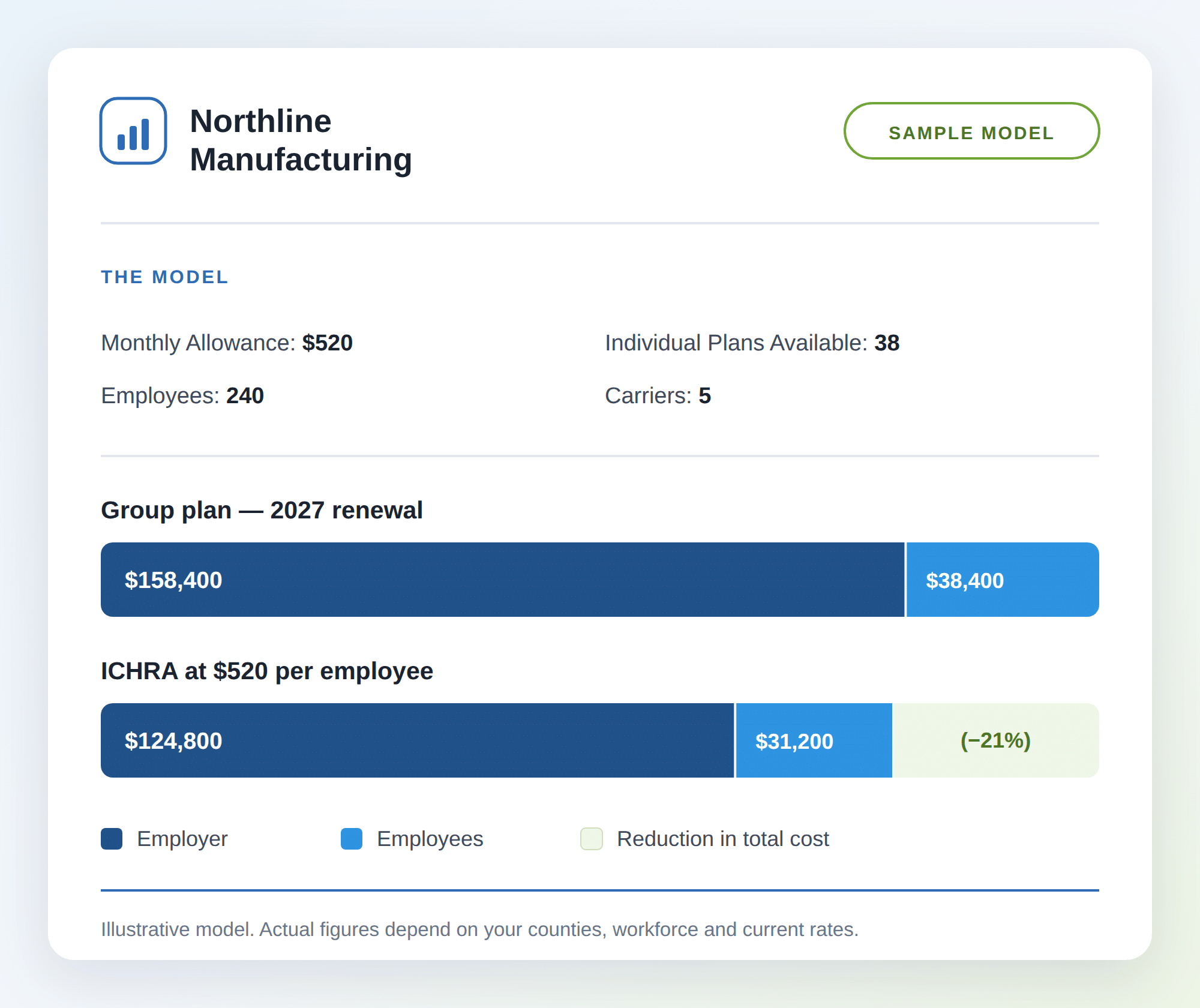
Most employers start by looking at current benefits spend and local individual-market premiums for their employees’ ages and locations. From there, they choose an allowance strategy. With a flat-dollar strategy, you offer a flat amount to all your employees (or employees across a group). With an age-banded strategy, you offer a percentage of a targeted plan’s premium, such as 75% of a gold plan.
Yes. ICHRA can either be used to fully replace your traditional group health plan or you can offer it alongside a group plan for specific employee classes. For example, you might offer a group plan to full-time employees and an ICHRA to part-time employees.
Employee classes let employers offer different allowance amounts and eligibility rules to defined groups, such as full-time, part-time, salaried, hourly, different locations, etc. There are 11 different classes and they are set by IRS regulations. Employees in the same class must be treated equally.
Yes. An ICHRA can satisfy the ACA employer mandate as long as premiums are considered “affordable” for your employees.
Yes. You don’t have to wait for annual open enrollment to start an ICHRA. Offering an ICHRA opens up a special enrollment period for your employees. Read our blog article on this for more.
Unused funds stay with the employer. If employees choose a plan that’s less expensive than your contribution, the extra funds stay with the company. You can also choose to reimburse out-of-pocket medical expenses with leftover funds.
ICHRA is available nationwide, but the experience varies with the strength of each state’s individual market. A handful of states have also begun adding their own ICHRA incentives. See what states are doing.
The allowance ends per your plan’s terms — but the employee’s health plan is theirs, not yours, so their coverage continues if they keep paying for it. There’s no COBRA-style group continuation to administer.
An ICHRA and a Premium Tax Credit (PTC) generally can’t be used together. If an ICHRA is considered affordable, an employee who accepts it isn’t eligible for a Marketplace Premium Tax Credit. If the ICHRA is unaffordable, the employee can choose between accepting the ICHRA or opting out and using the Premium Tax Credit instead. Read our blog article on this for more.
Setting up an ICHRA can happen in a matter of days when we have the information we need to get started. The bigger consideration is timing. Employers need to meet required notice periods and give employees enough time to understand their new benefit, review their coverage options, and choose an individual health plan.
Starting early gives everyone more time to prepare and helps make the transition to an ICHRA as smooth as possible.
Absolutely. Many employers keep their broker for overall benefits strategy while the ICHRA itself is administered by a TPA. We work alongside brokers regularly rather than replacing them.

ICHRA has a new name: CHOICE Arrangements. Learn what changed, what CHOICE means, and why the name change doesn’t change how ICHRA works.

The IRS has raised the ACA affordability rate for 2027 to 10.22% of household income, up from 9.96% and above 10% for the first time since the employer mandate took effect. Here’s what the new safe harbor limits mean for your contribution strategy.

One of the biggest advantages ICHRA has over group health plans is the ability to use employee classes. Instead of offering the same health benefits to everyone, you can use 11 employee classes to tailor your benefits strategy around your workforce.
Talk to Benafica about setting up an ICHRA or QSEHRA for your business.
We’ll help you choose the right HRA type, design employee classes, and handle all the administration.
Call us at 651-287-3253 or fill out the form below.